Post-renovation cleaning: what it covers and when to book it
What a post-renovation deep clean removes, when to book it relative to carpentry and furniture delivery, why no NEA licence covers home cleaning, and a handover checklist.
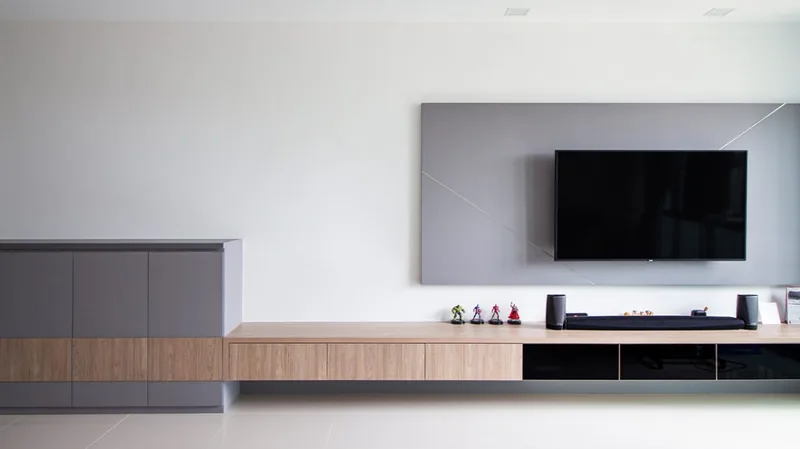
A post-renovation clean is a one-off deep clean that removes construction residue — cement and grout haze, fine gypsum and tile dust, paint specks, silicone smears, adhesive marks and protective film — from a flat that looks finished but is not yet habitable. Book it after the last dust-producing trade has left and after the contractor has removed debris, but before furniture, appliances and window treatments arrive. No Singapore agency licenses this service for homes: NEA's cleaning business licence covers general cleaning at premises and public places, and NEA lists cleaning of domestic premises as excluded cleaning work (https://www.nea.gov.sg/our-services/public-cleanliness/cleaning-industry/cleaning-business-licence).
A renovation ends with a flat that looks finished and is not yet habitable. Cement slurry has dried in a haze across new tiles, gypsum dust has settled inside every drawer and along every track, paint specks sit on window glass, silicone offcuts are stuck to shower screens, and protective film is still on appliance panels. A post-renovation deep clean is the trade that converts a finished site into a home, and the two decisions that matter are when to book it and what to hold the cleaner responsible for.
The post renovation cleaning Singapore households book is a one-off job, not a recurring service, and it is priced and staffed differently from a weekly clean. Construction residue is abrasive, alkaline and often bonded to the surface, so it needs scrapers, pH-appropriate chemicals, HEPA vacuums and people who know which of those will scratch a matt porcelain tile.
What a post-renovation clean actually removes
Cement and grout haze is the headline item. A thin film of cementitious residue left after grouting dulls tile across a whole floor and does not come off with a mop; it needs an acidic or specialist cleaner matched to the tile and grout, applied before the residue has cured for months. Natural stone and some polished porcelain will etch if the wrong product is used, which is why the material schedule belongs in the briefing to the cleaner.
Fine dust is the item that decides whether the clean was any good. Gypsum, sawdust and tile dust travel further than anyone expects: into the top of wardrobes, along curtain tracks, inside the aircon fan coil casing, behind door hinges, into sliding door channels, into electrical socket faces and into the ridges of skirting. A crew that wipes visible surfaces and calls it done leaves a flat that keeps producing dust for weeks.
The rest of the list is unglamorous and specific: paint and adhesive spots on glass and frames, silicone smears on tiles and screens, protective film and stickers on appliances, sanitary ware and hardware, marker lines from setting out, plaster on window sills and ledges, and debris caught in floor traps. Windows, tracks and grilles usually take the longest and are the first thing skipped when a crew is under-scoped.
No licence exists for cleaning a home — and that matters
Homeowners assume a cleaner must be licensed, and for residential work that assumption is wrong. The National Environment Agency runs a mandatory licensing regime for cleaning businesses, and its scope is explicit:
Businesses offering general cleaning services at premises or any public places, even if these services form only part of their overall business, are required to obtain a cleaning business licence before commencing any cleaning works. Cleaning works are mainly divided into 3 cleaning sub-sectors, namely (1) Office and Commercial, (2) Food and Beverage, and (3) Conservancy (including cleaning of public areas under Town Councils).
Domestic cleaning sits outside that regime. NEA states that the Environmental Public Health (Excluded Cleaning Work) Notification 2014 specifies the types of services considered "excluded cleaning work", that businesses providing only those services are not required to obtain a cleaning business licence, and gives cleaning of domestic premises as an example of excluded work. A firm cleaning a flat after renovation therefore needs no NEA licence for that job at all.
The enforcement teeth exist on the commercial side, not the residential one. NEA states that a cleaning business operating without a valid licence is liable to a fine up to $10,000 or up to 12 months' imprisonment or both, plus $1,000 for every day of a continuing offence, and that a service buyer engaging an unlicensed provider for general cleaning services is also liable to a maximum fine of $10,000 (NEA, cleaning business licence). Those provisions bite when an office, a coffee shop or a town council engages a cleaner — not when a homeowner books a flat clean.
An accreditation tier does exist, but it sits on top of the licence rather than beside it. NEA's Enhanced Clean Mark Accreditation Scheme awards a Clean Mark Silver or Clean Mark Gold accreditation, and the application form states that a business completes the accreditation section only if it is applying for the scheme on top of the cleaning business licence (NEA application form, version 1.6). A cleaner working only in homes needs no licence, so it is outside that scheme by design, and no accreditation or standard is published specifically for post-renovation cleaning of homes.
Two practical conclusions follow. A "NEA-licensed" badge on a home-cleaning company's website means the company also holds a licence for commercial work, which is evidence of scale rather than of residential quality, and its absence proves nothing. And because domestic work is unlicensed, the contract is the only quality control available to a homeowner: a written scope, a fixed date, a defined crew size, and a right to re-clean listed items.
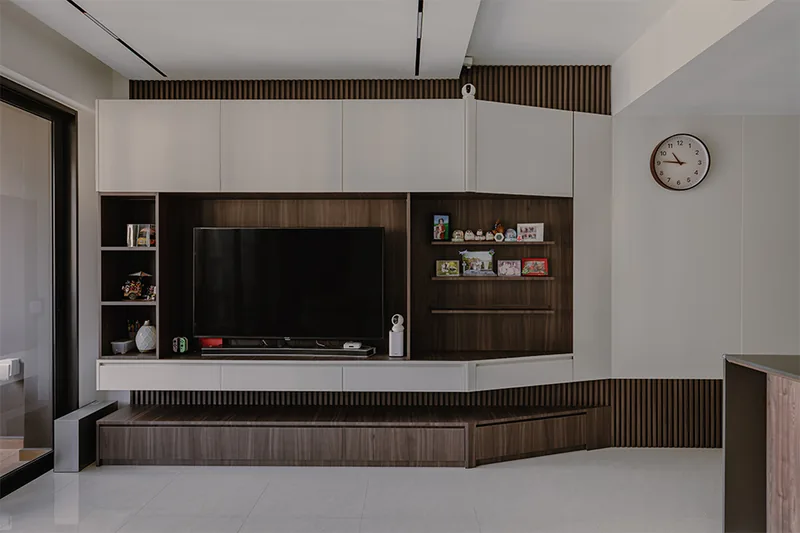
When to book it: after the last dusty trade, before the furniture
Sequence beats scheduling. The clean belongs after every dust-producing trade has finished — hacking, tiling, plastering, sanding, carpentry installation, painting touch-ups — and after the contractor has removed debris from the flat. Booking a deep clean while a carpenter still has two days of on-site trimming left means paying twice.
The clean also belongs before three deliveries: loose furniture, appliances that will be pushed into tight recesses, and window treatments. Curtains and blinds installed before the clean will hold construction dust in the fabric, and a fridge slid into a niche before the floor is cleaned traps residue where nobody can reach it. Aircon commissioning and a first filter clean sit naturally in the same window, because a fan coil that ran during renovation has drawn dust into its blower.
Allow a gap between the clean and the move-in date rather than stacking them. A flat cleaned on the same morning the movers arrive gets re-soiled by trolley wheels, cardboard and packing dust within an hour, and the owner never sees the standard they paid for.
Silicone and paint need curing time that no schedule shortens. Fresh sealant skins over quickly but continues curing, and aggressive cleaning of a shower joint days after application is a good way to break the seal. Let the contractor confirm which finishes are still curing before the crew arrives with chemicals.
Debris is the contractor's job, not the cleaner's
Renovation debris disposal belongs upstream of the clean, and HDB's guidance puts it on the contractor. MyNiceHome tells owners to contact their Town Council for disposal of bulky items and to ensure that their renovation contractor disposes of renovation debris properly (HDB — how to renovate your HDB flat). Cement bags, tile offcuts, hacked concrete, timber offcuts and packaging are not what a domestic crew is equipped or insured to remove, and a cleaner asked to clear them will either refuse or charge for a disposal run.
Old furniture and appliances follow a separate route again. Town Councils handle bulky-item removal for HDB residents, and booking that collection before the clean keeps the corridor clear and avoids a pile of discarded furniture sitting outside a freshly cleaned flat.
Common areas deserve the same attention as the flat. HDB asks owners renovating to be considerate to neighbours and to refrain from hogging the lifts, and a corridor left with cement footprints and dust after the works is the most common reason a neighbour's first interaction with new residents is a complaint.

What cleaning cannot fix
New-home smell is chemistry, not dirt. A deep clean removes dust and residue; it does not remove volatile compounds emitted by adhesives, coatings and composite boards, which dissipate with ventilation and time. From 1 January 2026, NEA requires interior paints sold in Singapore to contain no formaldehyde, with in-can content below 0.01% weight by weight (NEA media release) — and that rule covers paint, not the adhesives used in plywood, MDF and particle board carpentry. Airing the flat with windows and doors open for as long as the schedule allows does more for smell than any chemical.
Defects are not dirt either. A cleaner who removes grout haze may reveal chipped tile edges, lippage between tiles, uneven paint coverage or a scratched worktop that was hidden under residue, and those belong on the snag list with the contractor rather than on the cleaner's invoice. CaseTrust-accredited renovation businesses must provide a workmanship warranty of 12 months from the completion date, which is the mechanism for finish defects found after the clean (CASE — CaseTrust accreditation for renovation businesses).
A handover checklist to run before paying the cleaner
Inspect in daylight, and inspect at angles rather than head-on. Crouch and look along tiled floors and walls toward a window — haze, smears and missed patches show at a low angle and disappear when viewed square. Run a clean white cloth along the top of wardrobes, the top edge of door frames, curtain track surfaces and skirting returns, then look at the cloth.
Open everything the crew might have treated as closed: every drawer and cabinet including the ones with nothing in them, the household shelter, the service yard cabinet, sliding door channels, window tracks and grille runners, floor traps and the aircon fan coil cover. Check glass from both sides with the light behind it, check sanitary ware for cement flecks around the base and behind the pedestal, and check hardware for adhesive residue and film left in the joints.
Agree the remedy before the crew leaves. A short written list of items to be re-done, with the re-clean scheduled rather than promised, is worth more than a discount, and it is the last step that makes the flat genuinely ready for the people who will live in it.
Tell us the flat and when you get the keys.
You will get a written quotation with every line spelled out. Take it and compare it with anyone.
Get a quote