The BTO renovation journey, from key collection to moving in
The BTO renovation journey in order: defects filing inside HDB's 1-year window, the permit trigger, the household shelter rules, weekday-only demolition, long-lead items and handover.
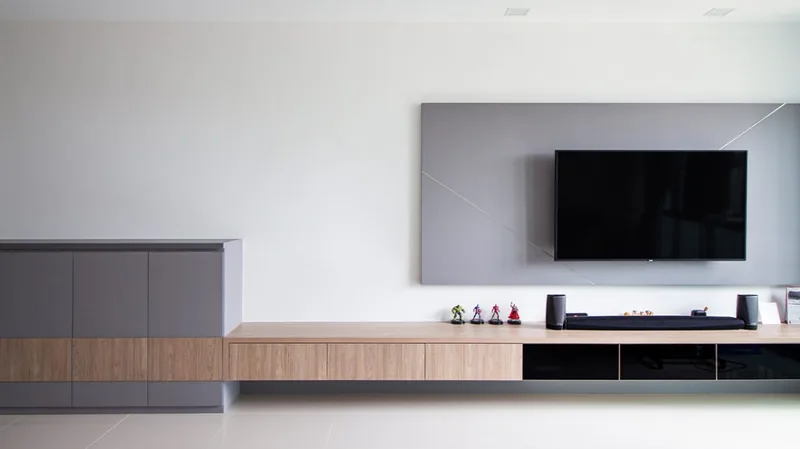
A BTO renovation journey runs in a fixed order: collect keys, inspect and log builder defects, confirm what a new flat's age allows you to touch, obtain the HDB permit, then run demolition, wet works, carpentry, finishing and the deep clean before moving in. HDB gives a newly completed flat a 1-year Defects Liability Period, within which a rectification request can be submitted online or at the Building Service Centre located in the precinct (https://www.hdb.gov.sg/managing-my-home/renovation-and-maintenance/rectification-of-defects-in-new-flats). The calendar is set less by a contractor's speed than by published constraints: HDB states that renovation should be completed within 3 months for new flats once approval is obtained, noisy works are confined to weekdays, toilet finishes in a new BTO flat may not be removed for 3 years, and long-lead items are ordered weeks before they are installed (https://www.mynicehome.gov.sg/get-settled-in/hdb-renovation-guide/).
- Before key collection: the only unhurried time you get
- Key collection, and what the Building Service Centre is for
- What a brand-new flat will not let you build yet
- The household shelter has its own rulebook
- The permit step, and what actually triggers it
- Demolition is a weekday-only activity
- Long-lead items, not labour, set the finish date
- Handover, snagging and the last week
A BTO renovation journey has a spine that no amount of optimism removes: keys, defects, permit, demolition, wet works, carpentry, finishing, cleaning, move-in. What separates two flats in the same block is rarely the contractor's speed — it is how early the owner froze decisions, and which published constraints they knew about before signing.
One widely repeated timing rule is real and one is not. HDB's renovation guide states that, upon obtaining approval from HDB, renovation should be completed within 3 months for new flats and 1 month for existing flats (MyNiceHome). The other rule — that owners must wait 30 days after key collection before a renovation permit can be applied for — appears nowhere in HDB's published renovation guidance, and no primary source for it could be found.
Before key collection: the only unhurried time you get
HDB's own guidance puts contractor selection before the keys, not after, and says so plainly:
Start thinking about your HDB renovation theme and sourcing for an interior designer (ID) or contractor before your key collection date. The creative process takes time, and conducting thorough research early ensures you'll be well-prepared for your HDB renovation journey.
— HDB, MyNiceHome renovation guide
Verification belongs in the same window. The Housing and Development (Renovation Control) Rules require an HDB flat owner to engage a contractor listed in HDB's Directory of Renovation Contractors, with contravention an offence carrying a fine not exceeding S$5,000 — the obligation sits on the owner, not only on the firm. The same rules make it an offence for an unregistered person to advertise as a registered renovation contractor, which is why a claim of registration is worth checking rather than believing. HDB's open dataset of listed contractors lets anyone confirm a company name and UEN in under a minute.
Listing is a floor, not a verdict. HDB states that it does not endorse or guarantee the quality of works of contractors in the Directory, and runs a demerit point system under which a registered contractor accumulating at least 24 demerit points within 24 months is delisted. A current listing means the firm has not been removed — a different thing from a recommendation.
Key collection, and what the Building Service Centre is for
Every new HDB development opens a Building Service Centre, and its operating period is tied to the first keys issued rather than to any one owner's collection date. The official welcome handbook for a Tengah project states it directly:
The BSC will commence operation once the first keys are issued and will be in operation for a year. You can submit your rectification request by scanning the QR code in your Welcome kit or notice pasted on your kitchen wall.
Builder defects and renovation defects are two separate accounts, and mixing them costs money. HDB gives a newly completed flat a 1-year Defects Liability Period, within which a rectification request can be submitted online or at the Building Service Centre located in the precinct (HDB — rectification of defects in new flats). Hollow-sounding tiles, doors that bind, taps that weep and windows that do not seal are the builder's to fix — but only while they are still visibly the builder's. Once a carpenter has scribed a wardrobe against a bulging wall, attribution becomes an argument.
The practical order: collect keys, walk the flat with a torch and a spirit level before any contractor starts, log every defect that day, and let rectification run while drawings are finalised. An empty flat is the easiest flat anyone will ever inspect.
What a brand-new flat will not let you build yet
Toilets are the standard collision between a new flat and a design ambition:
If you have a newly built BTO flat, you will have to wait 3 years before removing any wall or floor finishes in the toilets. This is to prevent damage to the waterproofing in these wet areas. Instead of hacking away the original tiles, you can overlay them with tiles of your choice.
— HDB, MyNiceHome renovation guide
Overlay is the cheaper answer and often the better one. Tiling over sound existing tiles avoids the debris, the noise and the waterproofing risk, at the cost of a few millimetres of floor height. Changing wall or floor finishes or extending a bathroom after that 3-year period still requires a permit from HDB.
The household shelter has its own rulebook
HDB's guide tells flat owners that the walls of the household shelter must not be hacked or drilled, and that the door should not be tampered with and must open and close properly at all times. The Singapore Civil Defence Force publishes the more granular list, and it is the document a carpenter should be quoting against rather than hearsay.
SCDF permits drilling into the internal face of household shelter walls and ceiling slabs to a depth of not more than 50mm to affix inserts and removable screws, and states that fixtures such as pictures, posters, cabinets or shelves on internal faces must be removed by owners within 48 hours upon notification (SCDF — permitted and not permitted works for household shelters). Not permitted, in the same document: power-driven nails fixed into internal shelter walls, wall tiles or gypsum plastering on internal faces, hacking either face to key for tiling, and modifying, removing or covering the shelter door, its notice or the ventilation plates.
The common advice that nothing may ever be fixed inside a household shelter therefore overstates the published position. The real constraint is that fixings stay shallow, non-permanent and removable on demand — a design brief, not a prohibition.
The permit step, and what actually triggers it
Permits are the flat owner's legal responsibility, though HDB allows a renovation contractor to be authorised to submit the application online on the owner's behalf. A permit is required before hacking or altering any walls, and HDB lists the other triggers alongside it: removing and replacing existing floor finishes, raising floor levels in the kitchen, balcony, bathroom or toilet, replacing a main entrance door situated along a fire escape route, and changing the location of doors within the flat.
Some works need a specific trade rather than a permit. HDB requires air-conditioners to be installed by a BCA-trained air-conditioner installer, and windows to be installed or replaced by a BCA-approved window contractor listed in the Directory of Renovation Contractors. Adding or relocating power points belongs to a Licensed Electrical Worker under the Energy Market Authority's rules.
Demolition is a weekday-only activity
The noisiest phase of the journey runs on the tightest clock. HDB permits general renovations from 9am to 6pm Monday to Saturday with none on Sundays and public holidays, while noisy renovations — demolishing walls, removing wall or floor finishes — are allowed only from 9am to 5pm Monday to Friday. Demolition therefore has at most five usable days in any calendar week, and a public holiday inside that week takes one of them away.
Schedule hacking to start on a Monday. A crew that starts on a Thursday burns two days, stops for the weekend, and leaves a flat full of rubble across it.
Long-lead items, not labour, set the finish date
Site work is rarely what stalls a renovation; procurement is. Windows, sintered stone or quartz slabs, imported sanitary ware, particular tile batches and custom glass all have lead times measured in weeks, and every one of them can be ordered before the first wall comes down. Carpentry drawings deserve a hard freeze date for the same reason — a wardrobe redesigned after the site measure restarts the fabrication queue, not just the drawing.
Deposit exposure has a published ceiling. CaseTrust caps the initial deposit an accredited renovation business may collect at 20% of the total contract cost and requires a deposit performance bond that protects deposits against closure, winding up and liquidation (CASE — CaseTrust for renovation businesses). A firm asking for half the contract value before delivery is asking the homeowner to finance it.
Handover, snagging and the last week
No public authority certifies renovation workmanship: HDB states that it does not endorse or guarantee the quality of works of the contractors it lists, and the only statutory defects mechanism attached to a new flat is the 1-year period for builder defects. Everything after that is contractual, which makes the owner's own snag list the governing document.
Run the handover walk in daylight, with the power on and the water running: open and close every drawer and door, check fronts against a straight edge, run every tap and feel for movement under the sink, test every socket and switch, and look along tiled walls at a low angle for lippage. A written snag list with photographs, dates and an agreed rectification date is worth more than a verbal assurance, and holding the final payment until that list is cleared is the ordinary way this is done.
CaseTrust-accredited renovation businesses must provide a workmanship warranty of 12 months from the completion date, which is the window in which shrinkage cracks, sticking doors and failed silicone typically appear. Noble Interior Design Pte. Ltd. is listed in HDB's Directory of Renovation Contractors (DRC Ref: HB-12-5230A, UEN 201722629H) and is CaseTrust-accredited. Where a dispute cannot be settled privately, the Small Claims Tribunals Act 1984 sets a prescribed limit of $20,000, extendable to $30,000 where both parties consent in writing (Singapore Statutes Online).
Move-in belongs after the deep clean, not before it. Furniture delivered into a flat that still holds grout haze and carpentry dust simply relocates the dust into the sofa.
- HDB / MyNiceHome — How to renovate your HDB flat
- HDB — Rectification of defects in new flats (1-year DLP)
- HDB — Parc Meadow @ Tengah welcome handbook (PDF)
- SCDF — Permitted and not permitted works for household shelters (PDF)
- Housing and Development (Renovation Control) Rules — Singapore Statutes Online
- HDB — Directory of Renovation Contractors
- HDB — Looking for renovation contractors
- data.gov.sg — HDB Directory of Renovation Contractors dataset
- CASE — CaseTrust accreditation for renovation businesses
- Small Claims Tribunals Act 1984 — Singapore Statutes Online
Tell us the flat and when you get the keys.
You will get a written quotation with every line spelled out. Take it and compare it with anyone.
Get a quote