Design consultation fees: what you should get for them
A consultation fee should buy a measured survey, a written scope and drawings you can take elsewhere. What to demand in writing, and who owns the plans under the Copyright Act 2021.
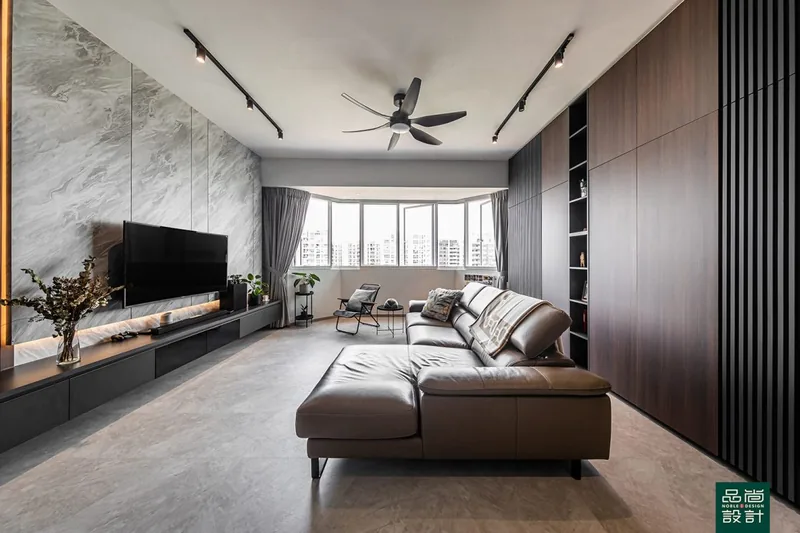
A design consultation fee in Singapore should buy a site attendance with real measurements, a written scope naming inclusions and exclusions, and drawings accurate enough for another contractor to price — not a showroom tour. Nothing regulates the fee itself, so the deliverable list, the revision count and the offset terms are the only parts you can verify before paying. Ownership does not follow payment: under the Copyright Act 2021 the author is the first owner of copyright in an authorial work, including a drawing, unless a written agreement says otherwise. Get the fee, the deliverables, the revisions, the offset deadline and the drawing rights in one email before any money moves.
- What a paid consultation should produce
- What a free consultation is, and what it is not
- Who owns the drawings after the fee is paid
- Offset, refundable and non-refundable are three different words
- What the consultation should produce for the HDB permit
- Who is allowed to do the work the consultation leads to
- Where consultation fees turn into disputes
- When the free consultation is the right choice
- What to put in writing before paying
A consultation fee buys time and a record of it. What separates a fee worth paying from one that is a deposit under another name is whether the meeting produces something you can hold, check and take elsewhere — a measured survey, a marked-up plan, a written scope, a budget structure. The interior design consultation fee in Singapore is unregulated, so the deliverable list is the only part of the arrangement that can be verified in advance.
What a paid consultation should produce
A site attendance with measurements is the first thing worth paying for, because every later drawing depends on it. Structural walls, service risers, the household shelter, window openings, floor trap positions, ceiling height under the existing beam and the position of the distribution board are the constraints that decide which layouts are even possible, and none can be established from a stock floor plan. A consultation that never enters the property cannot produce any of it.
A written scope statement is the second. Naming the rooms in play, the works proposed in each, and the works expressly excluded turns a conversation into something comparable against another firm's proposal. Scope written at that stage also becomes the reference point if the eventual quotation grows, which matters legally as well as practically.
A budget structure — not a price — is the third useful output. A consultation can honestly tell a homeowner which trades will dominate the spend, where the tolerances are, and which decisions are irreversible after demolition, without inventing a total. Actual figures belong to a quotation against a scope.
What a free consultation is, and what it is not
A free consultation is a sales meeting, and there is nothing wrong with that. Firms offering one are buying the chance to quote, and a homeowner attending one is buying nothing and owes nothing — which is the correct arrangement for a first conversation about style, feasibility and whether the two parties can work together at all.
A free consultation stops being free the moment it is conditional. Where drawings are released only after a booking sum, or where the "free" design is withdrawn unless the build is awarded, the design has been paid for through the build price rather than given away. Consumer legislation reaches this territory: Part 1 of the Second Schedule to the Consumer Protection (Fair Trading) Act 2003 lists at paragraph 19, as a specific unfair practice, offering gifts, prizes or other free items in connection with the supply of goods or services if the supplier knows or ought to know that the items will not be provided or provided as offered.
Who owns the drawings after the fee is paid
Paying for a drawing and owning the copyright in it are different things, and Singapore's default rule surprises most homeowners. The Copyright Act 2021 makes the author the first owner of copyright in an authorial work:
"Subject to the provisions of this Act, the first owner of copyright in a work is — (a) in the case of an authorial work — subject to subsection (2), the author"
Section 9 of the same Act states that an authorial work is a literary, dramatic, musical or an artistic work, and section 20 makes an artistic work include a drawing whether the work is of artistic quality or not, adding that for the purposes of the Act "drawing" includes any diagram, map, chart or plan — so a layout plan is squarely inside the rule quoted above. Section 133(3) then makes that default subject to any contrary intention in a written agreement made on or after 21 November 2021 by the person who would otherwise be first owner, and section 134 gives the employer first ownership where the work was made in the course of a contract of service. A homeowner who wants the right to take a paid layout to another contractor needs that right written into the engagement, because the fee alone does not transfer it.
Offset, refundable and non-refundable are three different words
An offset fee is credited against the contract sum if the project proceeds with the same firm, and kept if it does not. A refundable fee is returned in defined circumstances, and the circumstances are the whole clause. A non-refundable fee is payment for work already performed, which is defensible when real work was performed and indefensible when the deliverable was a showroom tour.
Written terms should state which of the three applies, what triggers the offset, and the deadline by which the project must proceed for the offset to survive. Where the money is meaningful, the payment protections that apply to renovation contracts are a useful reference point: CaseTrust requires accredited businesses to collect payments in phases upon agreed milestones, caps initial deposits at a maximum of 20% of the total cost, and requires a workmanship warranty of 12 months from the completion date of the works (CASE, CaseTrust accreditation for renovation businesses).
What the consultation should produce for the HDB permit
Drawings are not only a design product in an HDB flat; some of them are permit documents. HDB states on its renovation permit page that certain renovations require the flat owner to engage a Qualified Person to certify or supervise the work, and that renovation contractors are to submit the flat's floor plan showing the proposed work together with the electronic application for renovations (HDB, Application for a Renovation Permit). A consultation that ends with a mood board and no plan has produced nothing the application can use.
Timing constraints belong in the same conversation, because they change what is worth designing. HDB permits general renovation works from 9am to 6pm Monday to Saturday with none on Sundays and public holidays, restricts noisy works such as hacking and tile cutting to 9am to 5pm Monday to Friday, and requires owners of a newly built BTO flat to wait three years before removing wall or floor finishes in the toilets (HDB renovation guide, MyNiceHome). Designing a first-year BTO toilet strip-out is designing something that cannot lawfully be built yet.
Who is allowed to do the work the consultation leads to
A consultation that ends in a build has to end with a contractor the law permits the owner to engage. Rule 3 of the Housing and Development (Renovation Control) Rules requires an owner intending to carry out renovation works in an HDB flat to engage a renovation contractor registered by the Board, with a fine not exceeding $5,000 on conviction for a contravention, and Rule 6 separately makes it an offence, carrying the same maximum fine, for a person who is not a registered renovation contractor to advertise or hold himself out as one (Housing and Development (Renovation Control) Rules). The register of those contractors is published as an open dataset on data.gov.sg, so the check takes a minute.
Listing is not a quality rating, and HDB says so on its own page for homeowners looking for contractors: HDB does not endorse nor guarantee the quality of the works of the contractors listed in the directory (HDB, Looking for Renovation Contractors). What listing does carry is a demerit record, and HDB states that a contractor will be delisted from the directory on receiving a total of at least 24 demerit points within 24 months (HDB, Directory of Renovation Contractors).
Where consultation fees turn into disputes
Estimate drift is the common one, and the statute addresses it in plain language. The Consumer Protection (Fair Trading) Act 2003 makes it an unfair practice for a supplier, in relation to a consumer transaction, to do or say anything if as a result a consumer might reasonably be deceived or misled, to make a false claim, or to do anything specified in its Second Schedule — which includes, at paragraph 10 of Part 1, charging a price substantially higher than an estimate provided to the consumer, except where the consumer expressly agreed to the higher price in advance.
Scale matters when a dispute is already live. The Small Claims Tribunals Act 1984 defines the prescribed limit as $20,000 and the prescribed extended limit as $30,000, the latter available where the parties agree by a memorandum signed by them (Small Claims Tribunals Act 1984, section 2). Consultation and design fees usually sit well inside those limits, which is precisely why the paperwork is worth getting right at the point of payment rather than afterwards.
The industry-level numbers explain why the caution is proportionate rather than paranoid. CASE recorded 787 complaints against renovation contractors in 2025, down 18.2 per cent from 962 in 2024, with prepayment losses in the industry falling 73.8 per cent to $190,667 from $728,813.76 (CASE media release, February 2026).
When the free consultation is the right choice
Style, feasibility and fit are free-consultation questions. A homeowner still deciding between two very different layout directions, or still working out whether a firm's built work matches its renderings, gains nothing by paying for that conversation and should shortlist on free meetings.
Paying becomes worthwhile at the point where the output has to be accurate rather than indicative — a measured survey, a permit-ready plan, a specification another contractor could price without re-measuring. Paying also becomes worthwhile where independence is the product, because a designer paid a fee to review someone else's quotation has no build margin riding on the recommendation.
What to put in writing before paying
"Businesses are required to display pricing breakdowns clearly and communicate additional costs."
Six lines cover almost every consultation dispute: the fee and whether GST applies, the deliverables by name, the number of revisions included, the rate for work beyond them, whether the fee is offset against the contract and for how long, and who owns and may reuse the drawings. Any firm that will not put those six lines in an email has answered the question the consultation was meant to answer.
- Copyright Act 2021 (ss. 9, 20, 133 and 134), Singapore Statutes Online
- Consumer Protection (Fair Trading) Act 2003 (s. 4 and Second Schedule, Part 1)
- Housing and Development (Renovation Control) Rules (rules 3 and 6)
- HDB — Application for a Renovation Permit
- HDB — Looking for Renovation Contractors (no endorsement of listed contractors)
- HDB — Directory of Renovation Contractors (Demerit Points System)
- HDB renovation guide (MyNiceHome)
- CASE — CaseTrust accreditation for renovation businesses
- CASE media release, February 2026 (2025 complaint and prepayment figures)
- Small Claims Tribunals Act 1984 (s. 2, prescribed and extended limits)
- HDB — Directory of Renovation Contractors, open dataset on data.gov.sg
Tell us the flat and when you get the keys.
You will get a written quotation with every line spelled out. Take it and compare it with anyone.
Get a quote