HDB Electrical Rewiring: When a Resale Flat Needs It
HDB puts PVC cable lifespan at about 25 years. When a resale flat in Singapore needs rewiring, who may legally do it, and what a real scope covers.
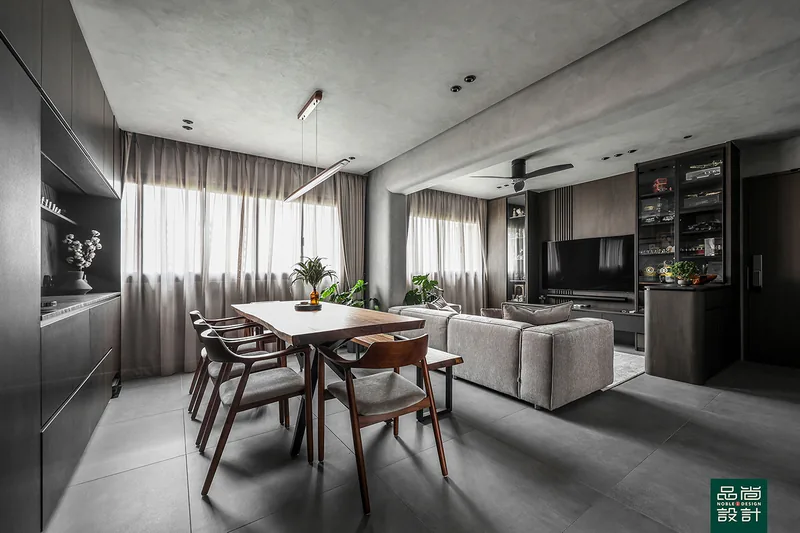
A resale HDB flat in Singapore usually needs rewiring when the cable has reached the end of its service life — HDB states that the estimated average lifespan of a PVC electrical cable is approximately 25 years (https://www.hdb.gov.sg/managing-my-home/renovation-and-maintenance/home-maintenance/home-care-guide/electrical-accessories-and-wiring) — or when the consumer unit has no residual current circuit breaker, which the Energy Market Authority requires every residential premises in Singapore to have (https://www.ema.gov.sg/consumer-information/electricity/electrical-safety). All wiring installation work in an HDB flat must be carried out by an EMA licensed electrical worker, and new wiring must be tested through SP Services before supply is turned on. Most rewiring items do not need an HDB permit, but every item remains bound by HDB's electrical guidelines, including the rule that wiring may not be embedded in reinforced concrete or wall plaster.
- How to tell whether a resale HDB flat actually needs rewiring
- Who may legally do the wiring in a Singapore flat, and who signs it off
- Does rewiring an HDB flat need a permit?
- Why new wiring in an HDB flat cannot be buried in the walls
- What a rewiring scope contains, item by item
- What an HDB rewiring package quote must show before you compare it
- Sequencing rewiring with the rest of the renovation
- The rule, in the regulator's own words
How to tell whether a resale HDB flat actually needs rewiring
Age is the first test, and HDB publishes the figure for it. HDB states that a flat's electrical wiring has a limited lifespan, that the estimated average lifespan of a PVC electrical cable is approximately 25 years, and that owners are advised to replace the wiring when its lifespan is over or when its condition has deteriorated (HDB Home Care Guide, Electrical Accessories and Wiring). A Singapore resale flat completed in the 1980s or 1990s that has never been rewired is past that estimate on HDB's own number, which makes rewiring a scoping question rather than an upsell.
The second test of whether a resale flat needs rewiring is what sits inside the consumer unit. HDB describes the consumer unit in a flat as an electrical distribution panel housed in an enclosure comprising double-pole miniature circuit breakers — one of which functions as the main switch of the consumer unit — a residual current circuit breaker, outgoing single-pole MCBs and terminals (HDB Home Care Guide, Electrical Accessories and Wiring). A board in a resale flat that still uses rewirable fuse carriers instead of MCBs, or that has no breaker carrying a test button, is telling you the installation predates that arrangement.
The third test is the residual current circuit breaker, and in Singapore it is a legal requirement rather than a preference. The Energy Market Authority states that by 1 July 2023 all residential premises were required to have an RCCB, that flats with no RCCB installed were given a grace period of two years to install one by 1 July 2025, and that all residential premises must have an RCCB or Earth Leakage Circuit Breaker, with homeowners who have neither facing "a fine of up to $5,000 from 1 July 2025 as enforcement checks may be conducted randomly" (EMA, Electrical Safety). EMA notes on the same page that HDB residential premises built before 1985 did not come installed with an RCCB or ELCB unless homeowners installed one subsequently, which is precisely the vintage of flat most often bought as a resale renovation project.
The fourth test is the rating of the flat's main switch, because it governs what may be added. HDB states that blocks completed on or after 1 January 1994, or that have undergone the Main Upgrading Programme or the Home Improvement Programme, are provided with higher electrical loading of a 40-amp main switch, and HDB splits several of its electrical guidelines according to whether a flat has a 30-amp or a 40-amp main switch (HDB Renovation Guidelines for Electrical Works). For flats provided with a 30-amp main switch, HDB caps consumption of an individual appliance at 3kW for an instantaneous water heater, washing machine with heater, electric oven or cooker unit, and at 1.5kW for a storage water heater, and states that there is no restriction on the number of appliances installed but that this is subject to the limitation of the existing main switch rating (HDB Renovation Guidelines for Electrical Works).
Visible symptoms are the fifth test. HDB's home care guide lists overheated plugs in a socket outlet, frequently blown plug fuses and burnt marks at a socket outlet among common problems, attributes them to loose connections, overloaded circuits or broken cable, and gives engaging a licensed electrician to check the cable as one of the solutions (HDB Home Care Guide, Electrical Accessories and Wiring).
One honest limit applies to all five tests: no Singapore authority publishes a rule saying a flat of a given age must be rewired. The 25-year figure is HDB's estimate of cable lifespan, not an expiry date, and HDB's guidance is that a licensed electrical worker can check the condition of the wiring and advise whether it needs to be replaced (HDB Home Care Guide, Electrical Accessories and Wiring). A quotation for a full rewire issued before anyone has opened the consumer unit and looked at the existing cable is a guess wearing a price tag.
Who may legally do the wiring in a Singapore flat, and who signs it off
The Energy Market Authority requires electrical works at consumers' premises to be carried out by Licensed Electrical Workers, and states that electrical works includes "any rewiring, modification/alteration, repair or replacement to the electrical installation" (EMA, Electrical Safety). HDB says the same thing for flats in its technical terms and conditions: all wiring installation work must be carried out by an EMA licensed electrical worker (HDB Renovation Guidelines for Electrical Works). EMA directs consumers to verify a licence through its e-License Information Services (ELISE) portal, so the licence number belongs on the quotation where you can check it.
A separate requirement applies to the renovation firm rather than the electrician. Under the Housing and Development (Renovation Control) Rules, an HDB flat owner must engage a contractor listed in HDB's Directory of Renovation Contractors, and contravention is an offence carrying a fine not exceeding S$5,000 (Housing and Development (Renovation Control) Rules). The Directory is published as an open dataset on data.gov.sg and is searchable by company name or UEN (DRC dataset). Listing is not a quality endorsement — HDB states that contractors listed in the DRC are aware of HDB's requirements, that HDB does not endorse nor guarantee the quality of their works, and that engaging them is a private contract between the flat owner and the contractor to which HDB is not privy (HDB, Looking for Renovation Contractors).
Sign-off is the step homeowners most often discover late. HDB requires the SP Services Ltd (SPSL) Form CS/5H, endorsed by HDB, to be submitted to SPSL for testing of any new electrical wiring or extension work, and requires the flat owner to apply to SPSL for inspection of the completed work through the licensed electrical worker (HDB Renovation Guidelines for Electrical Works). EMA adds that new wiring, rewiring and extensions have to be tested by an authorised officer from SP Services Ltd before supply can be turned on, and that the LEW will inspect and certify the electrical installation (EMA, Electrical Safety).
Does rewiring an HDB flat need a permit?
Whether rewiring needs a permit depends on the item and on the flat's main switch rating, and HDB publishes both lists. HDB places "additional lighting points/ fan points/ 13amps power points or extension of wiring/ rewiring" under electrical works that do not require a permit, together with covering of wiring with PVC trunking, encasement of surface wiring in conduit, and the alteration or addition of an RCCB, ELCB, MCB, socket outlet or main switch (HDB Renovation Guidelines for Electrical Works). A new 15-amp power point or 20-amp isolator requires an HDB permit in flats provided with a 30-amp main switch, and does not require one in flats provided with a 40-amp main switch or flats upgraded under MUP or HIP (HDB Renovation Guidelines for Electrical Works).
No permit is not the same as no rules. HDB states that for electrical works which do not require a permit the stipulated guidelines and conditions must still be complied with, and that works found to have been carried out without complying with the guidelines are treated as unauthorised works, which HDB will require the owner to discontinue, correct or remove, and to reinstate the flat to its original condition (HDB, Application for a Renovation Permit). Where a permit is required, HDB says the Licensed Electrical Worker may apply for the Electrical/Air-Conditioner Installation Permit on the owner's behalf, and that the owner may only proceed with the works after obtaining the necessary permit (HDB, Application for a Renovation Permit).
Why new wiring in an HDB flat cannot be buried in the walls
The no-embedding rule causes more surprise than any other item in a rewiring scope. HDB's technical terms and conditions for electrical works state that "embedding or wiring housed in metal/ high impact PVC conduit in reinforced concrete (RC) slabs, beam, column, wall and in wall plaster or other finishes is not allowed" (HDB Renovation Guidelines for Electrical Works). New circuits in a Singapore flat are therefore run on the surface in conduit or trunking, or concealed within a false ceiling, a bulkhead or carpentry — they are not chased into existing concrete or hacked into plaster the way homeowners often assume.
Fixings in an HDB flat are constrained as well. HDB states that the diameter and penetration depth of power-driven nails and screws must not exceed 6mm and 40mm respectively, and that in flats with concealed electrical wiring originally provided by HDB, precautionary measures should be taken to ensure that anchors, including hammering of nails, into the slab are located away from the concealed conduits shown in the concealed conduit layout plans (HDB Renovation Guidelines for Electrical Works).
The design consequence of the no-embedding rule is worth stating plainly: settle where the false ceilings, bulkheads and carpentry runs will be *before* the electrical first fix, because those are the only concealment routes available in an HDB flat. A rewire planned after the ceiling design is frozen ends up with surface trunking in places nobody wanted it.
What a rewiring scope contains, item by item
A rewiring scope that can be priced and checked usually lists the following, and a quotation that omits them is not comparable to one that includes them.
Distribution equipment. Replacement of the consumer unit including the main switch, the residual current circuit breaker and one MCB per final circuit, with the make and rating written down.
Lighting and power circuits. A schedule of lighting points, switch positions, 13-amp socket outlets and their circuits, room by room.
Dedicated circuits. HDB states that a 20-amp isolator is only allowed for air-conditioner installation and that appliances with an electrical rating exceeding 15 amps are not allowed (HDB Renovation Guidelines for Electrical Works). Water heaters, ovens and induction hobs each need their own circuit, sized against the flat's main switch rating.
Bathrooms. HDB states that power points should not be installed within bathrooms or toilets, which are classified as a wet area under the Singapore Standard SS 638 Code of Practice for Electrical Installations, and that exhaust fan installation is only allowed in bathrooms and is not allowed at other locations such as the kitchen, service yard, balcony or bedrooms (HDB Renovation Guidelines for Electrical Works).
Ceiling fan points. HDB's conditions for ceiling fan installation are that the weight of the fan should not exceed 6kg, that clear height from the finished floor level to the fan blades should be at least 2.4m, and that the hardened steel expanding bolt should not exceed 8mm in diameter with the penetration depth of the steel plug not exceeding 40mm (HDB Renovation Guidelines for Electrical Works).
Television points. HDB states that the original television points provided cannot be tampered with and must be left accessible for future maintenance, and that any alteration or extension of the original television points is to be carried out by a licensed StarHub Cable Vision installer (HDB Renovation Guidelines for Electrical Works).
Testing and making good. Form CS/5H submission, SPSL testing through the LEW, and patching and repainting where trunking, conduit and back boxes were fixed.
Indicative figures for a Singapore flat sit here once real quotations are attached.
What an HDB rewiring package quote must show before you compare it
The phrase *hdb rewiring package* is used loosely in Singapore, and two quotations carrying the same headline figure can describe completely different work. A quote worth comparing shows a point schedule rather than a lump sum, states whether the rewire is full or partial and which circuits are being left alone, names the routing method for each area, gives the consumer unit make and rating, names the licensed electrical worker and licence number, says whether SPSL testing is included, and says who patches and repaints afterwards.
The accreditation questions are worth asking in the same conversation, because renovation prepayment is where Singapore homeowners lose money. CASE received 787 complaints against renovation contractors in 2025, down 18.2% from 962 in 2024, while renovation prepayment losses fell 73.8% to S$190,667 from S$728,813.76 and remained the second highest of any industry (CASE media release, February 2026). CASE reported that approximately 97% of the 962 renovation complaints it received in 2024 were against non-CaseTrust-accredited contractors (CASE media release, February 2025). CaseTrust accreditation for renovation businesses caps the initial deposit at a maximum of 20% of total contract cost, requires a 12-month workmanship warranty from completion, and requires a deposit performance bond covering closure, winding up or liquidation (CaseTrust). Noble Interior Design Pte. Ltd. is listed in HDB's Directory of Renovation Contractors (DRC Ref: HB-12-5230A, UEN 201722629H) and is CaseTrust-accredited.
HDB also operates a demerit point system for listed contractors, under which accumulating 24 or more demerit points within 24 months results in delisting from the Directory (HDB, Directory of Renovation Contractors).
Sequencing rewiring with the rest of the renovation
Rewiring is a two-visit trade in most Singapore flats. The first fix runs cable, sets back boxes and positions the consumer unit, and it has to happen after hacking and before false ceilings, bulkheads, plastering and carpentry close the routes. The second fix terminates the points, fits the accessories and energises the board, and it happens near the end, after painting.
Renovation work hours constrain the programme. HDB's general renovation hours are 9am to 6pm from Monday to Saturday with none on Sundays and public holidays, while noisy works — heavy hacking, extensive demolition, tile cutting and excessive drilling — are restricted to 9am to 5pm on Mondays to Fridays only (MyNiceHome HDB Renovation Guide). Drilling for conduit fixings and back boxes is the part of a rewire that runs into those restrictions, which is why a rewire in an occupied Singapore block is usually planned as a weekday block of work rather than spread thinly across weekends.
The rule, in the regulator's own words
From 1 January 2026, NEA requires interior paints sold in Singapore to contain no formaldehyde, with in-can content below 0.01% weight by weight. The rule covers interior PAINT — it does not regulate adhesives in composite wood or carpentry.
— NEA / MSE
The text above is quoted from NEA / MSE joint release; the link goes to the primary source so it can be checked rather than taken on trust.
- HDB Home Care Guide — Electrical Accessories and Wiring
- HDB Renovation Guidelines for Electrical Works
- HDB — Application for a Renovation Permit
- EMA — Electrical Safety (LEW requirement, RCCB)
- Housing and Development (Renovation Control) Rules
- HDB — Looking for Renovation Contractors
- HDB — Directory of Renovation Contractors (demerit points)
- DRC open dataset on data.gov.sg
- CASE media release, February 2026 (2025 complaint and prepayment figures)
- CASE media release, February 2025 (97% non-accredited)
- CaseTrust accreditation for renovation businesses
- MyNiceHome HDB Renovation Guide
- NEA / MSE joint release
Tell us the flat and when you get the keys.
You will get a written quotation with every line spelled out. Take it and compare it with anyone.
Get a quote