Curtains, blinds and window treatments as part of the renovation
Which window treatments need an HDB permit, the pelmet and fixing rules that govern curtain boxes, and when to measure so the curtains actually fit.
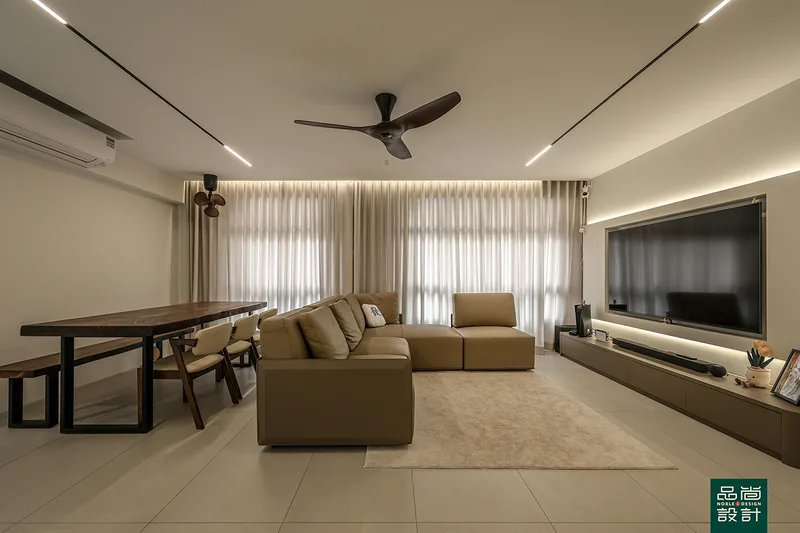
Installing a curtain rail, venetian blinds or bamboo chicks internally needs no HDB permit, and placing film over the glass panel of existing windows needs none either provided the film is non-reflective or does not exceed 20% reflectance. Building the pelmet or curtain box that hides the track is regulated: HDB requires a minimum pelmet clearance height of at least 2.10 metres from finished floor level, non-combustible materials, and fasteners into the underside of the RC slab no larger than 6mm in diameter and 40mm in penetration depth. Replacing the window itself is a separate job for which HDB requires a renovation permit and a BCA Approved Window Contractor listed in HDB's Directory of Renovation Contractors. Measure curtains only after floor finishes, false ceilings and any window replacement are complete, because all three move the reference points.
Window treatments are usually the last item quoted and the first item to expose a planning mistake. A curtain track has to be fixed to something, powered if it is motorised, and measured against a floor level and a ceiling line that do not exist until late in the job — which is why curtains belong in the renovation drawings rather than in a separate shopping trip afterwards.
What needs a permit, and what does not
Interior soft furnishings sit outside HDB's permit regime. HDB's renovation guidelines for window works list "installation of bamboo chicks/ venetian blinds/ curtain rail internally" under permit required: no. Applying film over the glass panel of existing windows or balcony doors also needs no permit, subject to one measurable condition — HDB states the film should be non-reflective or not exceeding 20% reflectance.
Replacing the window itself is a different matter entirely. HDB states that a renovation permit is required for all windows replacement work, and that a BCA Approved Window Contractor listed in HDB's Directory of Renovation Contractors must apply for that permit before the work starts. HDB's home care guide on windows further warns that failing to retrofit windows with stainless steel rivets carries a fine not exceeding $5,000 or imprisonment for a term not exceeding 6 months, or both. A curtain quotation and a window quotation are therefore governed by two different rulebooks, and only one of them can be handled by a soft-furnishing supplier.
Where the track goes, and what the fixing rules allow
Three mounting positions exist, and each has its own constraint. A track screwed to the underside of the reinforced concrete slab is the strongest and the most restricted; a track inside a recessed curtain box built into a false ceiling is the tidiest; a track on a wall bracket above the window reveal is the cheapest and the most forgiving of an uneven ceiling.
Pelmets and curtain boxes are regulated as ceiling works. HDB's renovation guidelines for building works state:
"For installation of cornices and pelmet, the minimum clearance height of pelmet must be at least 2.10 metres measured from finished floor level"
"For installation of false ceilings, the minimum clearance height of 2.4 metres measured from finished floor level (not applicable for toilets and bathrooms)"
"Non-combustible materials must be used for the false ceilings, cornices, pelmet and decorative panels"
"All fasteners/ connectors (e.g. screws, nails, bolts, etc.) must not exceed 6mm in diameter and 40mm in penetration depth are to be used for fixing of false ceilings to the underside of RC slab"
— HDB, Renovation Guidelines for Building Works
Those four conditions settle most curtain-box arguments before they start. A deep pelmet in a flat with a low slab can breach the 2.10m clearance; a timber pelmet fails the non-combustible requirement; and an anchor longer than 40mm into the slab is outside the rule regardless of how heavy the curtain is. HDB also makes flat owners responsible for the removal and reinstatement of false ceilings, cornices and pelmets for inspection and maintenance, which is an argument for a demountable pelmet face rather than one skimmed and painted into the plasterboard.
Partition walls set a separate limit. HDB's important information on renovations states that Ferrolite Partition Walls, used as bedroom partitions in some newer flats, can withstand up to a maximum of 50kg load per bolt depending on the type of anchor bolt used, that a steel cavity anchor carries a maximum load of 20kg per bolt, and that the overall length for any bolts used should not exceed 50mm. That page also warns against damaging concealed electrical cables when drilling into the wall, and limits drill penetration depth in those walls to about 22mm. A heavy blackout curtain on a wide bedroom window is a real load, and a wall-mounted track on a partition wall needs its brackets counted against those figures rather than assumed.
Household shelters are stricter still. HDB lists installation of cornices within the household shelter among the works not permitted, while allowing drilling into the internal face of shelter walls and ceiling slab to a depth of not more than 50mm to affix non-metallic inserts and removable screws — and requiring that fixtures on the internal face be removed by flat owners within 48 hours upon notification. A shelter used as a study gets a tension rod or a bracket within those limits, not a built-in curtain box.
Choosing the treatment for the actual problem
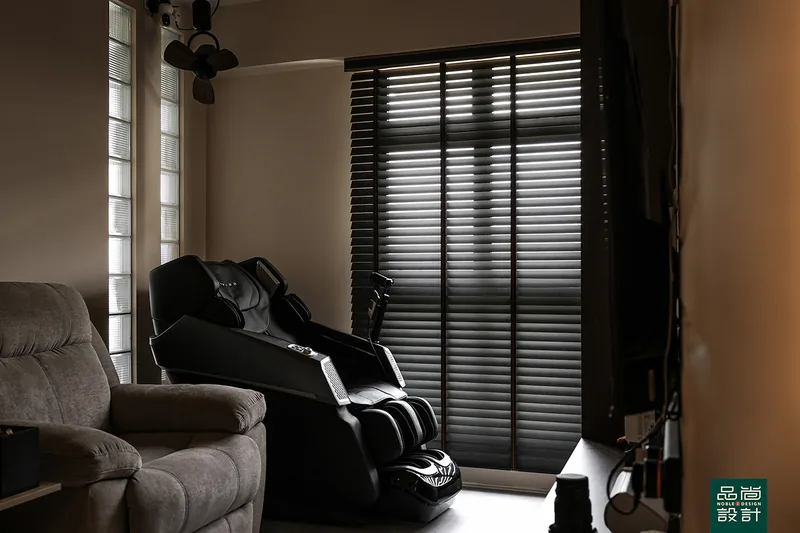
Heat, glare and privacy are three different problems, and one layer rarely solves all three. Day-and-night curtain sets pair a sheer inner layer that diffuses glare while keeping daylight with an opaque outer layer for privacy and darkness. Dim-out fabric reduces light heavily but leaks at the edges; true blackout uses a coated or three-pass fabric and only performs if the track returns to the wall and the fabric overlaps the reveal generously. A blackout curtain hung on a face-fixed rod that lets daylight leak down each side is a dim-out curtain at a blackout price.
Blinds trade softness for control. Roller blinds are compact and simple to replace, and a technical solar-screen fabric cuts glare while preserving the view — the sensible choice for a west-facing living room where a curtain would simply be kept shut. Venetian blinds redirect light upward onto the ceiling, which is useful in a study, and collect dust in a way that no one enjoys in a kitchen. Vertical blinds handle tall sliding doors. Timber shutters cost the most and last the longest.
Open balconies carry rules that catch people out. For balconies where permanent enclosure is not allowed, including DBSS flats and flats handed over after 1 July 2007, HDB states that the installation "must allow for natural ventilation within the balcony at all times, even when the screens/ blinds are fully drawn and closed", that the blinds have to be able to be drawn open or retracted fully, that the material must be porous and permeable, and that "glass, PVC or any material which will completely block off sun, light, rain and wind is not allowed". Outdoor zip-track blinds sold on the strength of keeping rain out are exactly the product that rule addresses.
Sequence and measurement
Measuring too early is the most common and most expensive error in the curtains Singapore HDB owners order, because three later trades move the reference points.
Finished floor level moves when the floor is laid. HDB caps the total thickness of floor finishes and screed at 50mm when finishes are replaced, and a curtain cut to a bare-screed measurement will pool on the tile or hang short of it.
The ceiling line moves when the false ceiling goes in. A track position agreed against a bare slab can end up outside the curtain box once the bulkhead is set out, and a recessed track needs the box dimensioned around the specific track and its runners rather than around a nominal width.
Window replacement moves the reveal. Where windows are being replaced by an Approved Window Contractor, HDB requires the replacement window to match and comply with HDB's original windows in colour scheme, dimension and window type, but the internal reveal and the position of the new frame still need confirming before brackets are drilled.
Motorisation moves the electrical plan. A powered track needs a socket or a concealed supply at the pelmet, which means the point is marked on the electrical layout during first fix, not chased into a finished wall afterwards.
Budget, and where the cheaper option wins
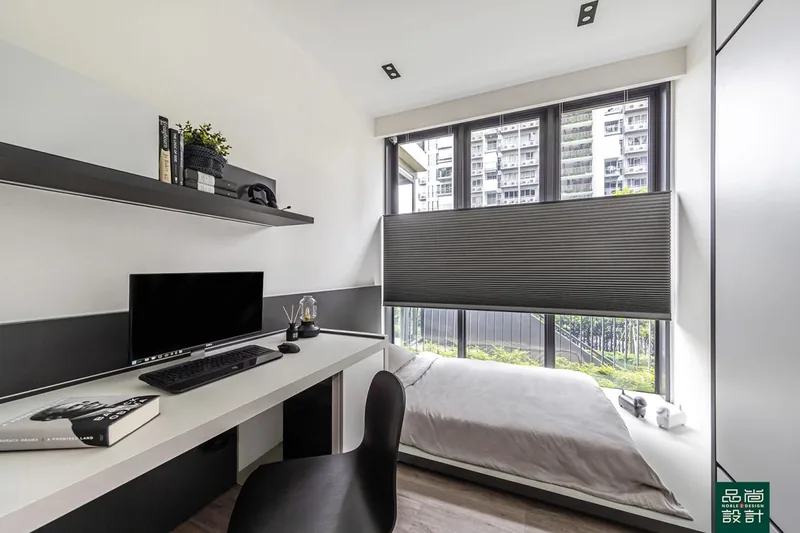
Window treatments are the easiest line item to over-specify. A recessed curtain box in a room that is not getting a false ceiling anyway is an expensive way to hide a track; a surface track in a matching finish disappears just as well from a seated position. Ready-made curtains in standard drops are entirely adequate for a bedroom that will be reconfigured within a few years, and a single well-chosen roller blind often beats a full curtain set in a study or a service yard.
Where the money genuinely earns its place is fabric weight, fullness and track quality. A heavier fabric hung at greater fullness blocks more light and hangs better, and a track that glides silently is the difference between curtains that get used and curtains that stay open. Plan the budget as separate lines — — so that a single quoted figure per window does not hide which of the five is being cut.
Getting the coordination right
Curtains fail more often on coordination than on craft. The pelmet is built by the carpenter, the power point by the electrician, the reveal by the window contractor and the fabric by a supplier who visits once, and the only party positioned to reconcile the four is the firm holding the drawings. Noble Interior Design Pte. Ltd. is listed in HDB's Directory of Renovation Contractors (DRC Ref: HB-12-5230A, UEN 201722629H) and is CaseTrust-accredited.
Disputes over soft furnishings are usually small in value and awkward to resolve, which makes the forum worth knowing in advance. The Small Claims Tribunals Act 1984 sets the prescribed limit at $20,000, extendable to a prescribed extended limit of $30,000 where both parties sign a memorandum consenting to it — a range that covers essentially every curtain and blind order in a residential renovation.
- HDB — Renovation Guidelines for Window Works
- HDB — Renovation Guidelines for Building Works (false ceilings, cornices and pelmets; household shelters)
- HDB — Important Information on Renovations (Ferrolite partition wall fixings)
- HDB — Home Care Guide: Windows
- Small Claims Tribunals Act 1984
- CaseTrust accreditation for renovation businesses
Tell us the flat and when you get the keys.
You will get a written quotation with every line spelled out. Take it and compare it with anyone.
Get a quote