What "fit out" means, and how it differs from renovation and from reinstatement
Fit out, renovation and reinstatement are three different obligations with three different bills. What each word means in a Singapore lease, what the statute calls them instead, and why no official reinstatement standard exists.
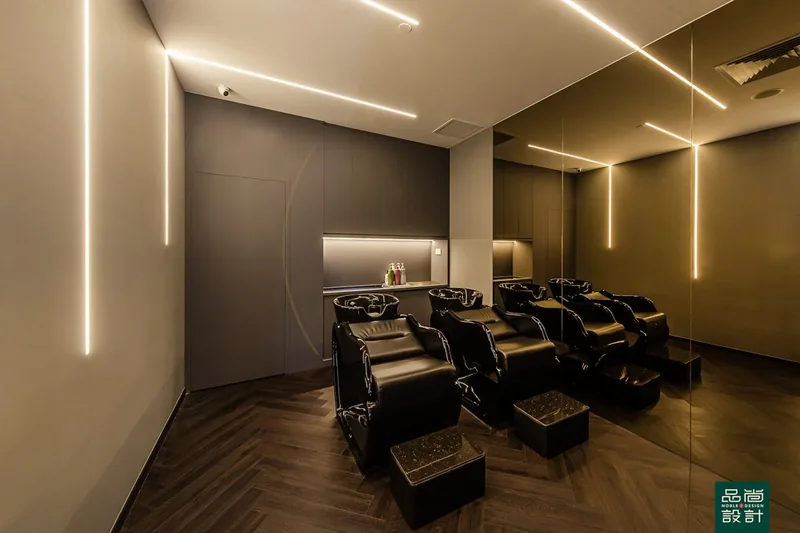
Fit out means the work a tenant carries out to make a shell, bare or stripped unit usable for its own business, and a fit-out contractor is the firm that builds it. Renovation is the wider word for altering premises that are already in use, and reinstatement is the reverse trip at the end of a lease — stripping that work out and returning the unit to the condition the lease demands. Singapore's building legislation does not define the phrase: the Building Control Act 1989 regulates all three as "building works", and HDB's tenancy documents call the first one "fitting out works".
Three words get used interchangeably in Singapore commercial property and mean three different bills: fit out, renovation, reinstatement. The distinction is not pedantry. It decides who submits the drawings, what the landlord can withhold, and whether the expenditure is deductible.
The three words, in the order they happen
A fit out is what a tenant builds to make a shell, bare or stripped unit usable for its own business. A fit-out contractor is the firm that carries out that work: ceilings, lighting, partitions, floor finishes, joinery, small power and data, air-conditioning distribution off the base-building plant, and the shopfront in a retail unit. The work starts from a unit that has never traded in its current form.
Renovation is the broader word for altering premises that are already in use. A shop that keeps trading and replaces its floor, repaints, and swaps its lighting is renovating, not fitting out. The physical trades overlap almost entirely; the difference is that a renovation happens around an existing operation and an occupied unit, which changes phasing, working hours, dust control and cost far more than it changes the materials list.
Reinstatement is the return trip. At the end of a lease the tenant strips out what it installed and returns the premises to the condition the lease requires — which is not always the condition the tenant received. IRAS describes it plainly in its guidance on business expenses:
"Generally, reinstatement costs (i.e. expenses incurred to reinstate premises to its original condition before vacating it at the end of the tenancy agreement) are not tax-deductible as they are considered capital expenditure disallowed under Section 15(1)(c) of the Income Tax Act 1947."
What Singapore law calls it instead
Singapore's building legislation does not define "fit out". Anyone searching for a fit out contractor meaning in the statute books comes back empty-handed, because the Building Control Act 1989 regulates the whole family of work under one term:
"'building works' means — (a) the erection, extension or demolition of a building; (b) the alteration, addition or repair of a building; (c) the provision, extension or alteration of any air conditioning service or ventilating system in or in connection with a building, and includes any fixed installation works, and any site formation works connected with or carried out for the purpose of paragraph (a), (b) or (c)"
Fitting out, renovating and reinstating all fall inside that definition, so the regulatory test is never which word appears on the quotation. The test is whether the plans require the approval of the Commissioner of Building Control, whether fire safety works are involved, and whether the use of the premises is changing. Part 4 of the Fire Safety Act 1993 is headed "CONTROL OF FIRE SAFETY WORKS" and section 56 "Prohibition of fire safety works without approval of plans" (Fire Safety Act 1993), and URA states that a change of use application generally takes 10 working days to assess and advises applicants not to commit on tenancy or renovation works before receiving a decision (URA, Changing the Use of Your Property).
Landlords do have a settled word for it, and it is not "fit out" either. HDB's shop renovation guide uses "fitting out works" and ties the approval obligation to the Tenancy Agreement for rental shops and the Memorandum of Lease for sold shops (HDB, Renovation Guide for Shop Tenant/Owner, Dec 2025). Reading the lease definition rather than the industry one is the reliable move.
Handover condition is the real dividing line
Whether a job is a fit-out or a renovation is decided by the schedule of landlord's works annexed to the lease, not by the label on the tender. Terms such as bare shell, warm shell and shell and core carry no definition in Singapore's building legislation and none in the published HDB, JTC or URA guidance on renovation and lease return; they are commercial shorthand, and two landlords using the same phrase can hand over very different units. A schedule that itemises floor finish, ceiling, lighting, sprinkler coverage, air-conditioning capacity, toilet provision, electrical supply and shopfront line is worth more than any of those labels.
Two questions settle most disputes before they start. What exactly is the landlord providing, item by item, and in what condition on the day of handover? And what must be left behind or taken away at the end? A tenant who answers both in writing knows the true scope of the fit-out and the true scope of the reinstatement on the same day.
Reinstatement is contractual, and no official standard exists
No Singapore government body publishes a reinstatement specification for private leases. There is no code that defines "original condition", no schedule of what must come out, and no independent arbiter of "fair wear and tear" — the standard is whatever the tenancy agreement says, which is why an identical unit can carry very different exit costs under two different leases. JTC, as a public landlord, describes a process for its own tenants rather than a general standard:
"You are required to reinstate your premises before returning it to us on the lease expiry date."
JTC arranges a joint site inspection approximately 6 months before lease expiry and then informs the tenant of the reinstatement requirements "taking into consideration the reinstatement obligations stated in your lease agreement", and states that a tenant is liable to pay double rent effective from the lease expiry date if reinstatement works are not completed in time (JTC). Private landlords vary in wording and in reasonableness, but the mechanics are the same: an inspection, a list, a deadline, and a deposit that can be drawn down.
The practical consequence for a fit-out is design-level, not admin-level. Every fixed item installed is an item that may have to be removed, and removal of a ceiling or a floor finish costs real money and real programme at the worst possible moment — while a new tenancy is already being paid for elsewhere. belongs in the first budget, not the last.
The tax treatment splits along the same line
Fit-out and renovation spending on business premises can attract a deduction; reinstatement spending usually cannot. IRAS allows a deduction under section 14N of the Income Tax Act 1947 for qualifying renovation or refurbishment expenditure, capped at $300,000 for every relevant three-year period — fixed for all businesses from YA 2025 to YA 2027 onwards — and given over three consecutive Years of Assessment on a straight-line basis, with a permanently available option from YA 2025 to claim it in one year instead (IRAS e-Tax Guide on renovation and refurbishment works). IRAS also requires a company to retain its records for at least 5 years from the relevant Year of Assessment (IRAS, record keeping requirements), so the fit-out invoices outlive the fit-out.
Reinstatement sits on the other side. IRAS treats reinstatement costs as capital expenditure disallowed under section 15(1)(c), but allows a deduction where the costs claimed do not relate to a provision made under FRS 16, are contractually provided for in the tenancy agreement, and the premises are not vacated due to any cessation of business (IRAS, Tax Treatment of Business Expenses (M-R)). The wording of a lease therefore has a tax consequence, which is an argument for reading the reinstatement clause with the accountant rather than only with the agent.
What to settle in writing before signing
Get the schedule of landlord's works, item by item. Get the reinstatement clause and ask the landlord to confirm, in writing, whether the tenant's ceiling, flooring and partitions must be removed. Confirm whether the intended use needs planning permission before committing. Check whether the works will need a Qualified Person and whether any element is fire safety work. Then let the fit-out design respond to those answers.
Residential work runs on a different set of rules entirely: HDB requires a permit before hacking walls, restricts general renovation to 9am to 6pm Monday to Saturday with nothing on Sundays and public holidays, and limits noisy work to 9am to 5pm Monday to Friday (HDB renovation guide, MyNiceHome). CaseTrust accreditation for renovation businesses, which caps deposits at 20% of the total contract cost and requires a workmanship warranty of 12 months (CASE), was built for that consumer setting. A commercial tenant relies instead on its own contract terms, retention and defects liability period.
- Building Control Act 1989, section 2 — definition of building works
- Fire Safety Act 1993 — Part 4, Control of Fire Safety Works; s.56
- URA — Changing the Use of Your Property (10 working days; do not commit before decision)
- HDB — Renovation Guide for Shop Tenant/Owner (Dec 2025), fitting out works
- JTC — Returning your premises upon lease expiry (joint inspection ~6 months before, double rent)
- IRAS — Tax Treatment of Business Expenses (M-R): reinstatement costs and Section 14N
- IRAS e-Tax Guide — Tax Deduction for Expenses Incurred on Renovation or Refurbishment Works (Eighth Edition, 30 Jan 2026)
- HDB / MyNiceHome — renovation guide, permitted hours and permits
- CASE — CaseTrust accreditation for renovation businesses
- IRAS — Record keeping requirements (retain records for at least 5 years)
Tell us the space and your dates.
You will get a written quotation with every line spelled out. Take it and compare it with anyone.
Get a quote